
Flooring for Rental Properties in Sydney: A Landlord’s Reality Check
· 3 min read · Flooring FX
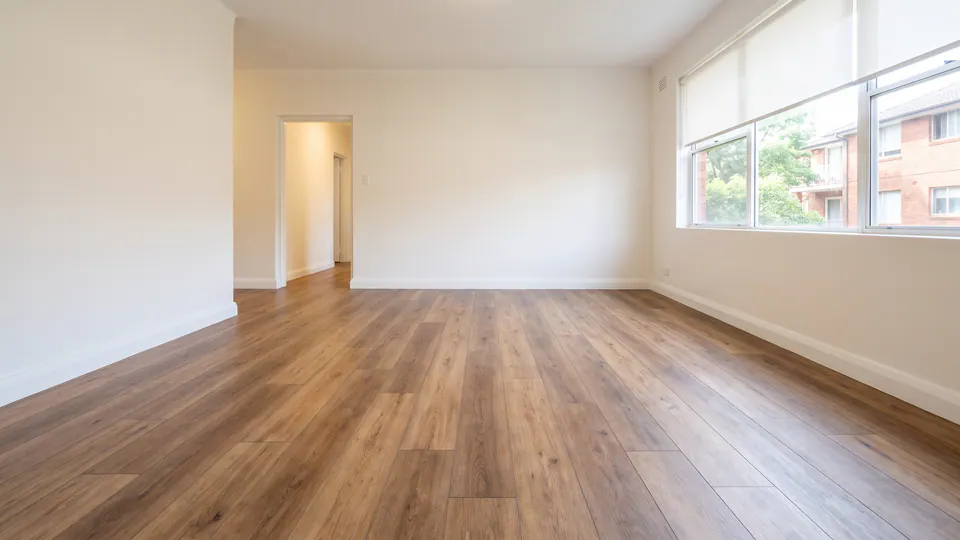
Selecting the right flooring for rental properties in Sydney requires moving past surface-level durability claims and focusing on the structural realities of your asset. While marketing materials often focus on the hardness of a board, the actual lifespan of your floor is determined by how well the installation handles Sydney's specific environmental and legal challenges.
Why 'Durability' Isn't Your Biggest Problem
Many landlords assume that buying the hardest board on the market exempts them from maintenance concerns. In reality, product hardness is secondary to installation integrity. A board might be scratch-resistant, but if it is installed over an uneven subfloor, the locking joints may fail under the weight of heavy furniture, leading to gaps or clicking sounds long before the finish wears out.
High-turnover rentals in the Inner West demand a different approach than a long-term family home. In these properties, you need materials that allow for targeted repairs rather than full-room replacements. If you own an older Sydney terrace, the subfloor is rarely flat; laying a floating floor over hills and hollows is a common mistake that leads to premature board failure.
The Strata Factor: Acoustic Compliance in Sydney Apartments
If your property is in a strata-titled building, your choice of flooring is governed by rules you cannot ignore. Most Owners Corporations have strict requirements regarding impact sound insulation. Choosing a floor based on aesthetics alone is a significant liability if it fails to meet the building's acoustic standards.
Landlords are sometimes forced to remove and replace flooring at their own expense because the material chosen did not have the correct certified acoustic underlay. Before you commit to a product, you must verify the specific acoustic requirements dictated by your strata by-laws.
A floor is a failed investment if it leads to a formal dispute with your neighbours or a rectification order from the building manager. Always ensure your chosen flooring system has the documentation to prove it meets the decibel reduction targets required by your specific building.
The Subfloor: Where Your Investment Actually Lives
The subfloor is the foundation of your entire investment. Whether you are installing hybrid flooring or laminate, the surface beneath should be stable and sufficiently flat. Imperfections in a concrete slab can cause the planks to flex, putting stress on the locking joints.
Regardless of the suburb, slab-on-ground construction often needs moisture testing before hard flooring is laid.
Professional floor levelling is the most effective way to ensure your floor stays quiet and secure for years. Creating a flat, smooth surface allows the floorboards to be supported evenly. Neglecting subfloor preparation is a primary cause of premature floor failure, often manifesting as clicking or joint failure in high-traffic rental environments.
Selecting for the Rental Cycle
When selecting materials, consider the ease of maintenance between tenancies. Hard flooring is generally easier to clean, but it is not immune to damage. Choosing a design with a consistent pattern makes it much easier to patch-repair a few damaged planks if a tenant accidentally gouges the floor, rather than needing to replace the entire room.
In many high-turnover rental scenarios, hybrid flooring is frequently chosen over carpet. While commercial-grade carpet offers acoustic benefits, it requires specific, frequent cleaning protocols that tenants may not follow, leading to staining and premature wear. A rigid-core hybrid floor is designed to withstand heavy foot traffic and furniture movement, providing a longer service life between tenancies.
- Avoid complex patterns or dark, solid colours that highlight every scuff, scratch, and dust particle.
- Always keep a small surplus of your chosen flooring stored safely; batch colours change, and finding a perfect match for a specific production run years later can be difficult.
Next Steps for Your Investment Property
There is no substitute for a site visit when evaluating the needs of your property. Assessing the condition of your existing subfloor and reviewing your strata documentation ensures the installation remains compliant and stable. To get a clear picture of what your property requires, book a free measure with our team. We can bring samples to your site, discuss the specific demands of your building, and help you plan an installation that stands up to the reality of the Sydney rental market.