
Can You Lay Hybrid Flooring Over Existing Tiles?
· 4 min read · Flooring FX
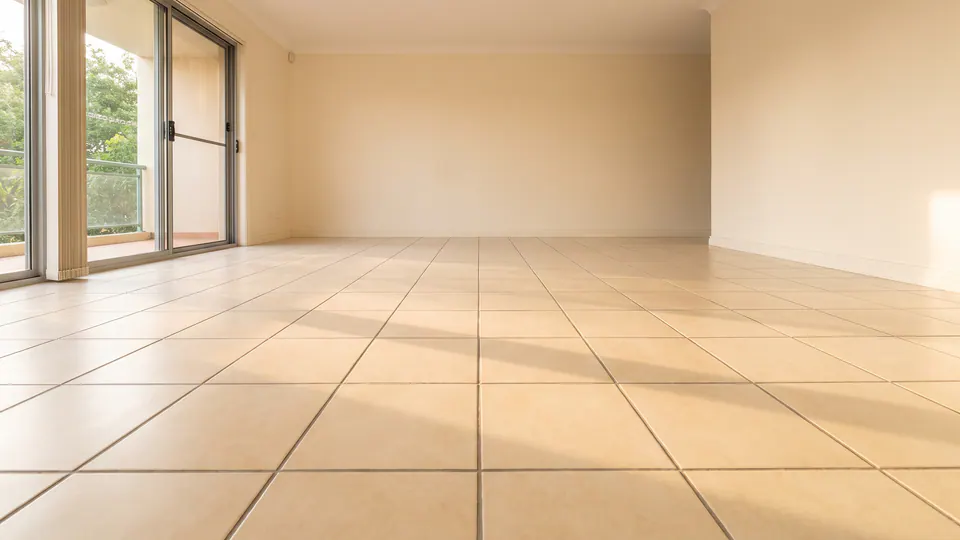
Laying hybrid flooring over tiles is a common request in Sydney renovations, but it is rarely as simple as clicking new boards over the old surface. While the floating nature of hybrid flooring allows for installation over rigid substrates, the success of the job depends on the condition and stability of the tiles underneath. Understanding the mechanics of your subfloor is essential before committing to the installation.
The Reality of Floating Floors Over Rigid Surfaces
A floating floor is not fixed to the subfloor; it expands and contracts as a single, connected unit. Unlike a solid timber floor that is glued or nailed, a floating system relies on a flat plane to distribute weight evenly across the locking mechanisms of each plank. If the surface below is uneven, those joints become the weakest points, bearing the stress of every footstep, and can eventually fail. Hybrid flooring's rigid core requires a flat foundation to prevent joint stress.
- Tiles present a unique challenge because they are rarely perfectly level across an entire room, especially in older Sydney homes.
- A 'drummy' or hollow tile indicates a loss of bond with the slab, which creates a soft spot that can cause the hybrid floor to bounce and the joints to fail.
- Deep or wide grout lines can potentially telegraph through a new floor, meaning the pattern of the tiles may show through the surface.
- Coastal humidity in Sydney can exacerbate issues if moisture becomes trapped between the non-porous tile surface and the new hybrid planks.
When You Need Professional Floor Levelling
Skipping subfloor preparation is a common cause of premature floor failure. If your existing grout lines are wide or deep, they may need to be filled to create a monolithic surface. Locking systems are designed to perform best on a rigid, flat surface; deviations can lead to joint stress.
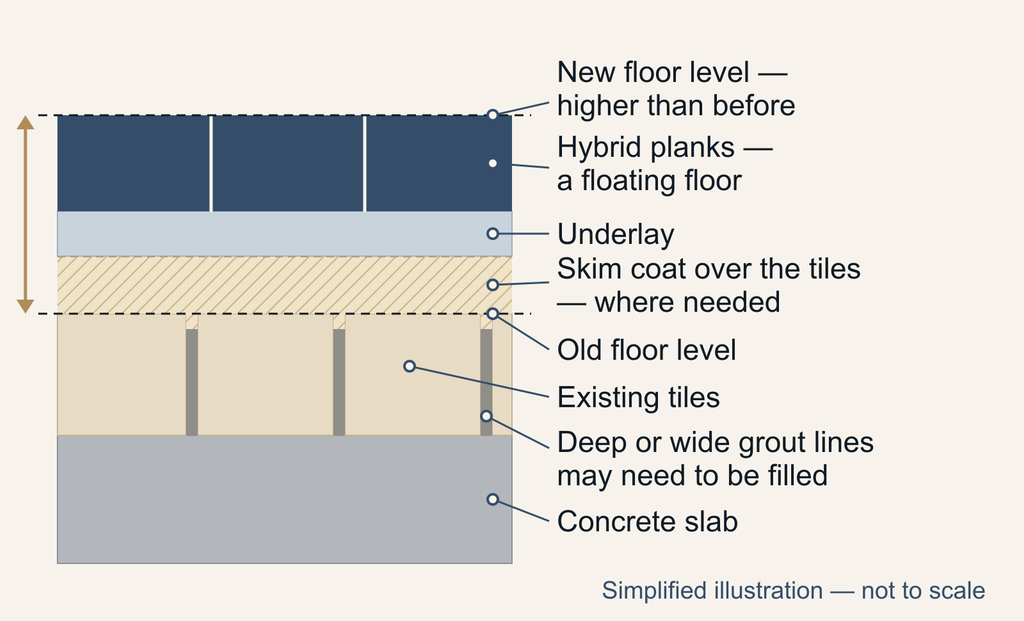
If the floor is not flat, professional floor levelling is used to bridge those gaps. Applying a skim coat over the tiles helps ensure that the weight of your furniture and foot traffic is distributed evenly, rather than concentrating force on the weak points of the locking system. To determine if your current floor requires this preparation, an installer uses a straight-edge level to map the high and low points across the area. You can book a free measure to have an expert inspect your subfloor and identify what is needed to ensure a stable installation.
Height, Doors, and Transition Hazards
Adding a new layer of flooring on top of existing tiles changes the functional height of your home. In many Sydney terraces and older apartments, door frames, skirting boards, and joinery are precisely fitted to the current floor level. Adding the thickness of your new hybrid planks plus the required underlay can prevent doors from opening or closing properly, often necessitating the planing of internal doors. This is a common physical reality in older housing stock where clearances are tight.
In strata-titled apartments, you may need to consider acoustic compliance. Many strata by-laws mandate specific acoustic ratings for flooring installations, which dictates the type of underlay you may need. You should also consider the transition hazards created at doorways. When the new floor sits higher than the adjacent carpet or timber in another room, you may need transition strips to bridge the gap. These strips prevent tripping and protect the exposed edge of the hybrid plank from chipping.
Moisture Risks and Subfloor Integrity
It is a common misconception that hybrid flooring acts as a moisture barrier. While the planks themselves are water-resistant, they are not impervious to the moisture that can be trapped between two non-porous surfaces. If your tiles are laid on a concrete slab that experiences rising damp, moisture can condense between the slab and the new floor, potentially leading to mould growth. A moisture test is often required to assess the slab's suitability for a floating floor.
- Check for any signs of dampness or efflorescence on your existing tiles before starting.
- Loose or drummy tiles may need to be removed or re-secured, as a moving base can cause your new floor to shift and click.
- In cases of significant tile damage or unevenness, removal may be the most effective way to achieve a suitable subfloor.
- Visit our hybrid flooring hub to read the technical specifications regarding moisture and subfloor requirements.
If you are unsure whether your subfloor is suitable for laying hybrid flooring over tiles, you can compare flooring types to see if a different material might be more forgiving in your specific environment. A quick assessment of your current tiles can help you understand the requirements for your renovation.